
Huntersville City Directory Holdings
Huntersville falls within Mecklenburg County, so the useful shelf is a set of Charlotte and Mecklenburg city directories rather than a separate annual town roll. The surviving selected volumes span 1875/76 through 1940. Some list a household or work address that reaches a rural or suburban part of the county. Others do not include a given Huntersville family at all. The best first stop is the library catalog and the Carolina Room, then the digitized catalog records that identify a volume before a researcher spends time browsing it.
| Collection | Years | Where Held | Access |
|---|---|---|---|
| Mecklenburg city directories | 1875/76, 1903, 1905/06, 1907 | Carolina Room and digitized catalogs | Browse, catalog, or scan |
| Charlotte directory run | 1909-1918 and 1920 | Carolina Room and NCGenWeb routes | Selected volumes, not an annual town roll |
| Miller and later Charlotte volumes | 1931-1935, 1938, 1940 | Library collections and DigitalNC records | Catalog or library access |
| Yearbooks, newspapers, maps, and plats | Coverage varies by title | Carolina Room and library databases | On site, licensed, or selected remote access |
The Charlotte History Toolkit illustrates how a directory, plat, deed, and permit can be used together. It is a method resource, not a replacement for the record held by the county office. For current address-keyed work, use the separate Huntersville by-street directory route instead of treating an old printed entry as present occupancy.
Note: A missing name may reflect coverage, a changed spelling, a rural route, or a household member who was not the listed person.
The History Toolkit source shows the local research tabs used for this kind of directory-and-address work.
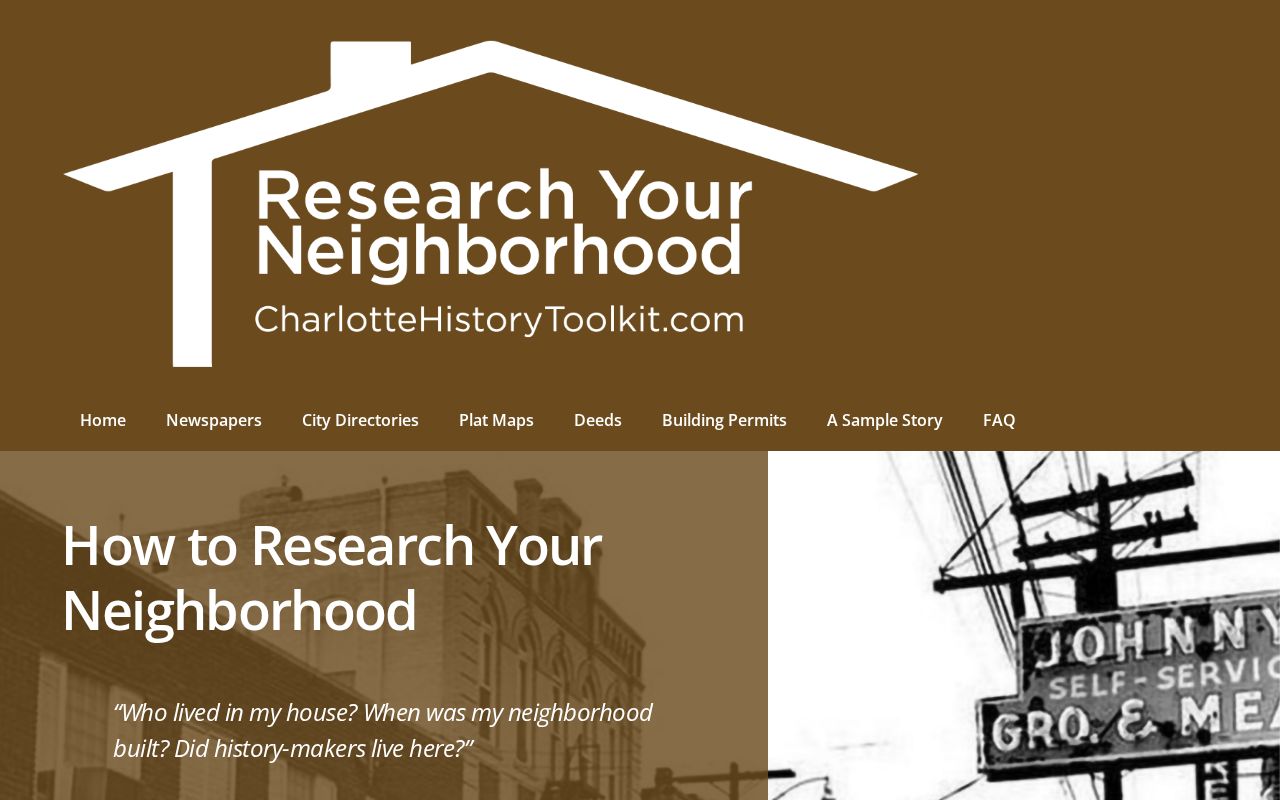
Its sequence helps keep a Huntersville city directory clue tied to the address and time period that gave it meaning.
Huntersville City Directory at Carolina Room
The Robinson-Spangler Carolina Room holds city directories alongside Mecklenburg government documents, newspapers on print and microfilm, public and private school yearbooks, maps, family manuscripts, photographs, and genealogy material. On-site visits are by appointment, and phone or virtual reference is available at 704-416-0150. That matters when a volume is not fully searchable online or when a former street name needs help from a map, vertical file, or newspaper.
The library also provides The Vault for selected remote collections, Charlotte Observer archive access from 1888 to the present for library-card users, and Ancestry Library Edition and FamilySearch Affiliate access on the library network. A scanned directory is not necessarily name indexed. A researcher may need to choose a year, browse a page image, and inspect the volume’s own front matter.
The Carolina Room archives page is the current access point for those collections.
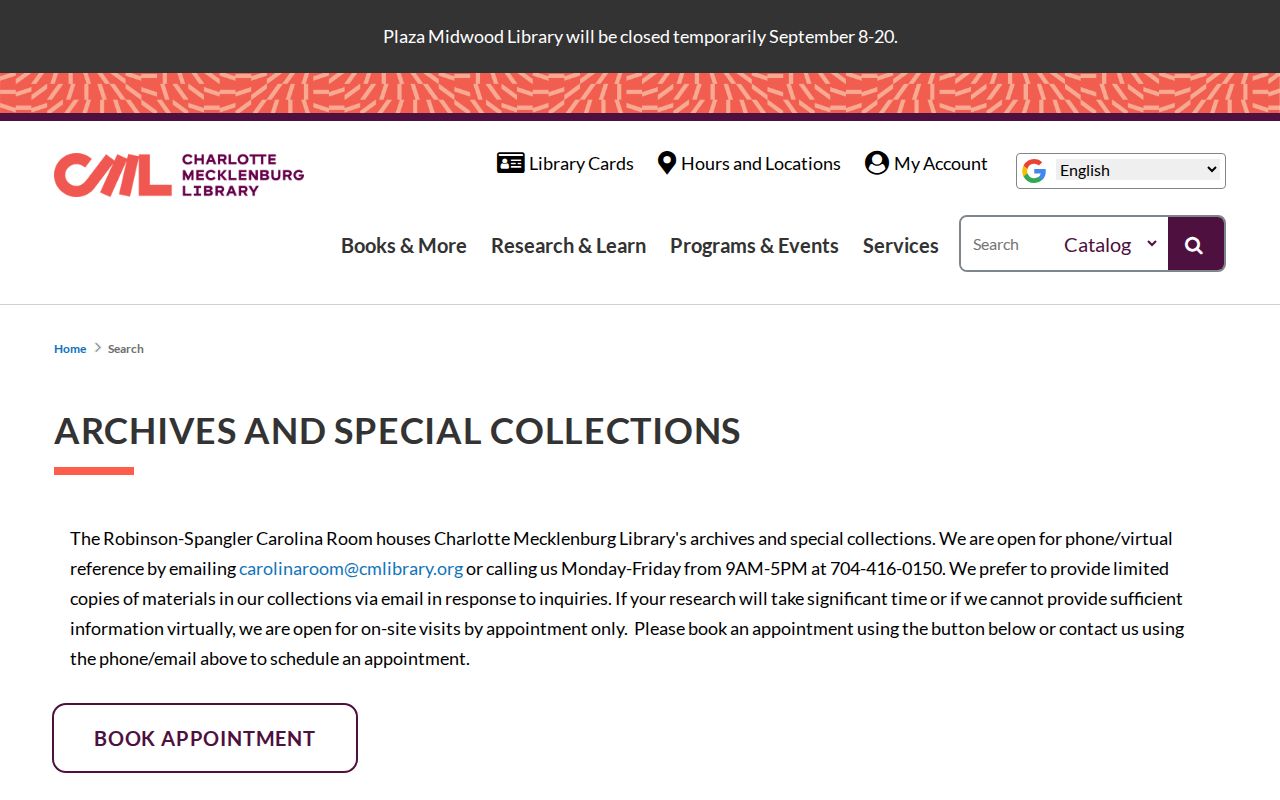
Using the archival route gives a Huntersville city directory search a fallback when a catalog record alone does not show the needed page.
Walsh and Hill Directory Years
Publisher names are useful anchors. The 1875/76 book is identified as Beasley & Emerson’s Charlotte Directory. W.H. Walsh Directory Co. is identified for the 1903 Charlotte and Mecklenburg record, with Walsh volumes also represented for 1905/06 and 1907. The selected run continues through Charlotte volumes from 1909 to 1918, a 1920 volume, Miller’s 1931 directory, 1932 through 1935 volumes, and Hill’s 1938 and 1940 books.
These dates describe what was located, not uninterrupted publication or full Huntersville coverage. Put the year, publisher, page, spelling, and address into research notes. That small citation makes it possible to return to the same city directory later, especially if a name appears under initials or an old street form.
The 1903 Walsh catalog record identifies the digitized Charlotte and Mecklenburg directory volume.
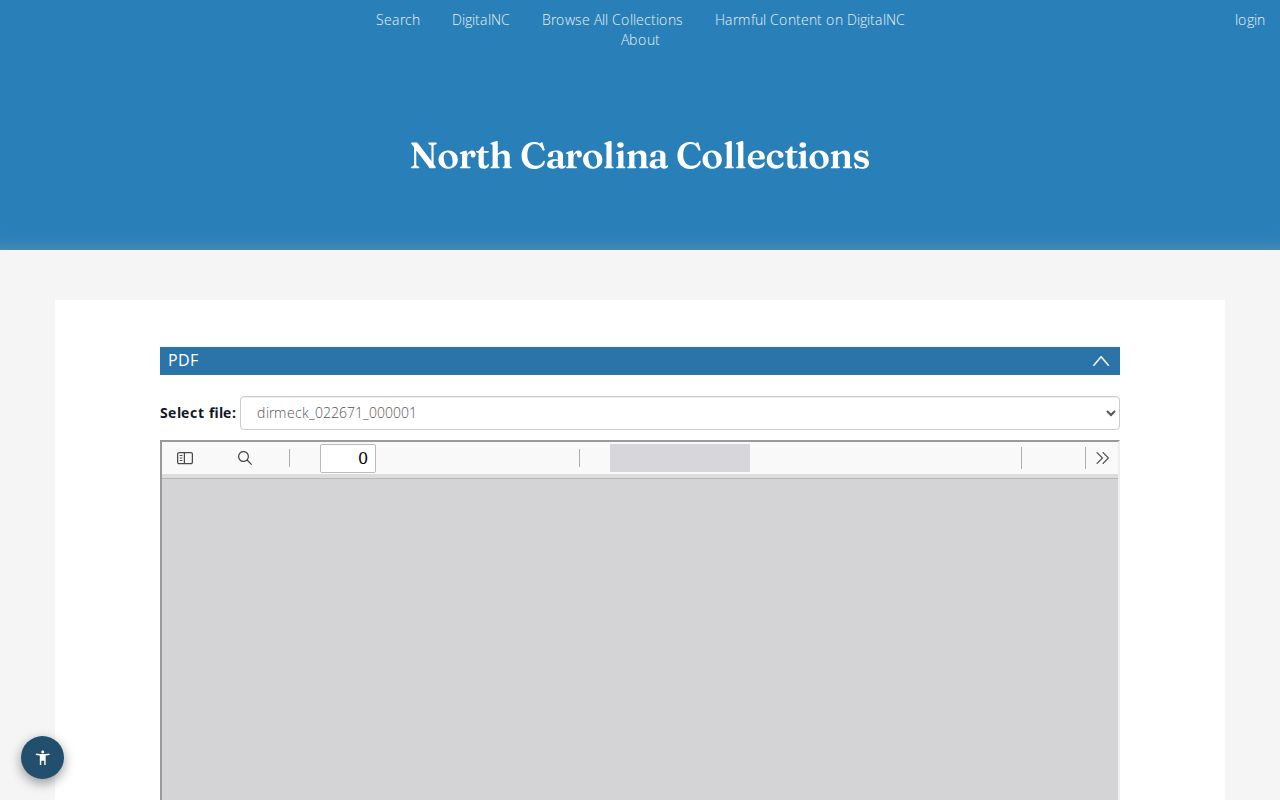
The catalog evidence gives the Huntersville city directory search a publisher and year before a page-level conclusion is drawn.
Reading a Huntersville City Directory Entry
A line in a 1931 scan can carry more than a name. It may show surname and given name, a spouse in parentheses, an occupation or employer, a home address marked with h, a residence or work reference marked with r, telephone or business detail, and a former or new address in parentheses. Record exactly what appears before interpreting it. In particular, r is not automatic proof of a present household, and an old or new address marker can be a move clue rather than a correction.
| Name line | Spelling, initials, and spouse notation can distinguish similar people. |
|---|---|
| Occupation or employer | A local institution can be checked in newspapers, yearbooks, or census material. |
| h and r | Use the volume’s own key before assigning home, residence, or work meaning. |
| Address notation | House number, street, and parenthetical old or new number can expose a move or renumbering. |
| Historical notation | Describe historical source text accurately and do not silently modernize it. |
- Criss-cross directory
- A street-order directory section that can be browsed by address. No verified local annual criss-cross run was located for Huntersville.
- Householder index
- An index arranged around the listed household person, not a full census of each person at an address.
- Abbreviation key
- The volume’s front-matter guide to its own marks, initials, and street conventions. Read it before translating a line.
Note: Preserve a historical marking as source language, with context, rather than rewriting it as if it were modern record terminology.
Digital Routes for City Directories
DigitalNC catalogs individual books and may supply OCR or PDF images, while library routes point to The Vault, newspapers, and other local materials. NCGenWeb is a practical entry to the selected directory list. The digital route is valuable for checking a name from home, but the catalog, page image, and physical collection still need to agree. If OCR misses an initial, browse nearby page images and try a surname portion rather than assuming the person was absent.
The library’s older Charlotte Mecklenburg Story presence has been moving toward The Vault and the History Toolkit. Use the current collection page rather than relying on an old web path.
The library transition note documents that change in the local digital-history route.
Following the current route helps a Huntersville city directory researcher reach the live collection links rather than an outdated landing page.
Trace Families with Huntersville City Directories
Directory years fill the spaces between federal censuses. Begin with a known street or distinctive surname, write down each field as printed, and move to the next available directory year. Then compare the address and family details with the nearest census, a deed, a tax or GIS record, and a newspaper notice. A directory can name a lodger, adult child, or another household member who does not appear in a deed, so the documents answer different questions.
- Choose the available directory closest to the known address or event.
- Read its abbreviation key and capture the spelling, spouse, work, street number, and parenthetical address details.
- Check the next selected city directory volume and note whether the person moves, changes work, or disappears.
- Pair the result with the nearest public federal census, from 1790 through 1950, and compare the household.
- Use a deed, parcel, obituary, or newspaper item to test whether a gap signals a move, death, unlisted status, or a different person.
The 1900, 1910, 1920, 1930, 1940, and 1950 censuses are useful checkpoints beside the 1903 through 1940 directory run. Census geography can still place a Huntersville family under a township, rural route, or adjacent place. Write down that geography rather than forcing each record to use a modern town label.
Craighead Clues in Directories
Huntersville began as Craighead, was renamed for Robert Boston Hunter, and developed around a railroad and mill economy. The town was chartered in 1873, and Anchor Cotton Mills opened in 1898. Those facts give a city directory search extra terms: railroad, mill, school, church, lodge, farm community, and the earlier town name can uncover a newspaper or manuscript reference that a modern address search will not.
The library news source is useful for confirming current library access as collections and branding change.
Collection updates matter because a Huntersville city directory search often depends on the library’s present catalog and archive access.
Huntersville City Directory Limits
No separate annual Huntersville directory roll was verified, and no authoritative local criss-cross year run was located. The selected Mecklenburg books are valuable historical evidence, but they do not prove every household, every year, or current residence. Street renames add another reason to retain original wording. In 2025, former North Main became Thread Lane and former South Main became Combs Lane, so both terms may be needed for older address research.
Directory geography also changes the way a negative result should be read. A Huntersville household can appear under a rural route, township, nearby postal place, or a Charlotte and Mecklenburg service area rather than the modern town name. Compare the street number with the printed year, then use the parcel's legal description or a plat if the address looks familiar but the municipality does not. A directory is strongest when it is treated as a dated publication record and checked against a census, deed, or library source from the same period.
Use a directory result as a dated lead, then verify the person and address against the office or collection that holds the stronger record.